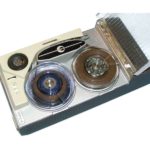
Fi-Cord Reel to Reel Tape Recorders

Company Description

Fi-Cord- The Mini-Spy Tape Recorders for secret agents

A London marketing firm put its name on a pocket-sized Swiss tape recorder — and the workshop that built the later models would grow into one of the most revered names in professional sound.

Fi-Cord is one of those brands that turns out, on inspection, to be a name rather than a factory. The recorders that carried it were tiny — pocket and handbag machines from the cusp of the transistor age — and the story of who actually made them runs from a workshop in Yorkshire to a Swiss bench that would later turn out legends.

A name on someone else’s machines

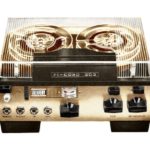
The brand belonged to Fidelity-Recording Fi-Cord Ltd, of Dover Street, London — a marketing and distribution operation rather than a manufacturer. Its earliest recorders were British-built: the Model 1A and the 202 portable were made for Fi-Cord by Erskine Laboratories in the UK around 1959–62. But the design itself was Swiss, licensed from a firm recorded as Ouellet-Stellavox, and from about 1963 production shifted across to Switzerland entirely.

Small enough to spy with

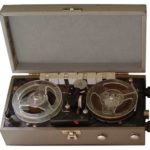
What made Fi-Cords memorable was their size. The 1A weighed about two kilograms and ran on four rechargeable cells; the later 101, made in Switzerland around 1964, was barely larger than a paperback and weighed close to a single kilogram. They found a natural home in the hands of radio reporters chasing interviews, and a second, more clandestine reputation besides — collectors and museums alike file the later 300A under “spy tape recorder,” and one museum catalogues a Fi-Cord squarely under law enforcement and surveillance. For all that, a contemporary reviewer judged the little transistor portable favourably against the bulky studio machines of the day, noting it would “fit easily into any large handbag or small attaché case.”

The workshop that became a legend

The most interesting thing about Fi-Cord is what its supplier became. The Swiss firm behind the later models — the one the records gesture at as “the company that later became Stellavox” — was the work of Georges Quellet, and Stellavox would go on to become one of the most admired makers of professional portable recorders in the world, the boutique rival to Nagra. Seen from there, Fi-Cord’s pocket machines look less like an obscure footnote and more like an early, humble chapter in a celebrated story: the modest consumer gadgets made by hands that would later build studio-grade instruments. The badge on the front said Fi-Cord; the craft inside was the beginning of something far larger.

Fi-Cord Reel to Reel Tape Recorder ModelsSubmit New Model

General Information

Brand: Fi-Cord

Sorry! Nothing To Display