









Skip to content
  • Home
  • Tape Recorders
    • 2 Track
    • 4 Track
    • Super High Fidelity
    • Mid Fidelity
    • Vintage
    • Semipro/ Studio
    • Brands/ MFG’s A-C
    • Brands/ MFG’s D-L
    • Brands/ MFG’s M-R
    • Brands/ MFG’s S-Z
    • Tape Recorder-New Generation
    • Service/Technicians
  • Tapes
    • 2 Track
    • 2 Track Classical
    • 2 Track Jazz
    • 4 Track
    • 4 Track Classical
    • 4 Track Jazz
    • 4 Track Pop-Rock
    • 4 Track Japan
    • Labels & Duplicators
    • New Generation Tapes
  • R-R Resources
    • Harrison Catalogs of Recorded Tapes 1956-1976
    • Ampex Catalogs of Pre-recorded Tapes 1965-1975
    • Amateur Tape Recording 1959-1967
    • Reel to Reel Tape Recorder Publications
    • Links – Interesting RR Websites
    • Service Shops
  • RR Misc
    • Tape Head Preamplifiers
    • Input Expanders
    • Noise Reduction
    • Elcaset
    • RCA cartridge
  • Buy / Sell
    • Reel to Reel Tapes for Sale
    • Reel to Reel Tape Recorders For Sale
    • Sell Tapes
    • Sell Tape Recorder
  • History
  • Login
  • Register
Reel Reel Logo

Reel-Reel Tape Recorders

Reel to reel tape recorders represent the best sound available to Audio High Fidelity listeners. Better than turntables, CD or any digital sources currently available,  reel tape recorders have been the top choice of recording studios for decades and there is no better format available to deliver great sounds.Read more. . .

  • Login
  • Register
×

A Member Community Resource for Reel to Reel People

Member Sign Up  or..
Casual Visitor Sign In
Already a member of Reel-Reel.com? Log In
Member Benefits on Reel-Reel.com (Why Register?)   ?

Access to

• User Reviews R-R Recorders & Tapes
• Price History R-R Recorders & Tapes
• Build Your Own Custom Collection Profile
• Communicate & Share your collection with Other Members
• Follow Other Members Collections
• Forum Access
• Save Favorites and Get Updates if Items Become Available for Sale
• Search the complete database

Reel Tape Enthusiasts Registration

Member Benefits on Reel-Reel.com (Why Register?)   ?

Access to

• User Reviews R-R Recorders & Tapes
• Price History R-R Recorders & Tapes
• Build Your Own Custom Collection Profile
• Communicate & Share your collection with Other Members
• Follow Other Members Collections
• Forum Access
• Save Favorites and Get Updates if Items Become Available for Sale
• Search the complete database
Accurately fill in the following if you might want to sell tape recorders or tapes on this website (now or in future)
Tell us about your interests (This will improve your search experience on the R-R website)
My Equipment

By completing registrations, I agree to the terms and conditions posted on this website Terms and conditions

Member Benefits on Reel-Reel.com (Why Register?)   ?

Access to

• User Reviews R-R Recorders & Tapes
• Price History R-R Recorders & Tapes
• Build Your Own Custom Collection Profile
• Communicate & Share your collection with Other Members
• Follow Other Members Collections
• Forum Access
• Save Favorites and Get Updates if Items Become Available for Sale
• Search the complete database

Casual Visitor Registration

Hope you enjoy the website!

Just in case you are a reel to reel tape recorder enthusiast and want to enjoy all the benefits, communicating with other members and adding information to the site, you would best use the Member Sign Up


By completing registrations, I agree to the terms and conditions posted on this website Terms and conditions

Member Benefits on Reel-Reel.com (Why Register?)   ?

Access to

• User Reviews R-R Recorders & Tapes
• Price History R-R Recorders & Tapes
• Build Your Own Custom Collection Profile
• Communicate & Share your collection with Other Members
• Follow Other Members Collections
• Forum Access
• Save Favorites and Get Updates if Items Become Available for Sale
• Search the complete database
R -R By Country:
  • AU
  • DK
  • DE
  • HU
  • IT
  • JP
  • NL
  • NO
  • CH
  • GB
  • US
  • RU
  • CA

Reel to Reel Tape Recorders From Germany

  • AEG
  • ASC
  • Braun
  • Butoba
  • Clarion (GBC)
  • Diktat
  • Dual
  • EAMI
  • Elektron
  • Graetz
  • Grundig
  • Heimstudio
  • Kontakt
  • Korting
  • Kuba
  • Loewe-Opta
  • Maihak
  • Minifon
  • Neckermann
  • Neukord
  • Nordmende
  • Phonorex
  • Phonotrix
  • RFT
  • Rufa
  • Saba
  • Saja
  • Schaub-Lorenz
  • Telefunken
  • Teltape
  • Tonmeister
  • Uher
  • VEB
1882 To 1997
Allgemeine Elektrizitas Gesellschaft 1935– AEG introduces the first consumer tape recorder in the world, the K1 1943– Introduces stereo R-R recorders 1967– Merger with Telefunken – AEG-Telefunken 1969– Two Million Tape Recorders Sold with the Magnetophon 204TS 1985– AEG-Telefunken bought by Daimler. Telefunken no longer part of company name

Allgemeine Elektrizitas Gesellschaft

1935– AEG introduces the first consumer tape recorder in the world, the K1

1943– Introduces stereo R-R recorders

1967– Merger with Telefunken – AEG-Telefunken

1969– Two Million Tape Recorders Sold with the Magnetophon 204TS

1985– AEG-Telefunken bought by Daimler. Telefunken no longer part of company name

Less
  • Aeg Kl 15d Full-track-mono 1/2 Rec/pb Reel To Reel Tape Recorder 0KL 15D
  • Aeg Kl 25 Full-track-mono 1/2 Rec/pb Reel To Reel Tape Recorder 0KL 25
  • Aeg M 21 Stereo 1/2 Rec/pb Reel To Reel Tape Recorder 0M 21
  • Aeg Magnetophon Full-track-mono 1/2 Rec/pb Reel To Reel Tape Recorder 0Magnetophon
  • Aeg Magnetophon-65 Full-track-mono 1/4 Rec/pb Reel To Reel Tape Recorder 0Magnetophon-65
  • Aeg Magnetophon 5 Full-track-mono 1/2 Rec/pb Reel To Reel Tape Recorder 0Magnetophon 5
  • Aeg Magnetophon 75 Half-track Mono 1/2 Rec/pb Reel To Reel Tape Recorder 0Magnetophon 75
  • Aeg Magnetophon 85 Dual-track-mono 1/2 Rec/pb Reel To Reel Tape Recorder 0Magnetophon 85
  • Aeg Rs 1000-s Full-track-mono 1/4 Rec/pb+1/2pb Reel To Reel Tape Recorder 0RS 1000-S
  • Aeg Tonschreiber B Full-track-mono 1/2 Rec/pb Reel To Reel Tape Recorder 0Tonschreiber B
1977 To 1990
Less
  • Asc As 5000 Stereo 1/4 Rec/pb Reel To Reel Tape Recorder 0AS 5000
  • Asc As 6000 Stereo 1/4 Rec/pb Reel To Reel Tape Recorder 0AS 6000
1921 To 2017
1921– Max Braun (1883-1967), a mechanical engineer, started building small appliances in Germany 1923– Braun started making radio set components for the broadcasting industry 1929– Braun began making entire radio sets, becoming one of Germany’s leading radio manufacturers 1937– The first use of the Braun brand name and logo. 1938– The famous S50 electric razor produced, not to be manufactured until after the war 1960– Braun introduces the iconic and minimalist TG 60 R-R, designed by Dieter Rams 1970– The Braun TG 1000 R-R was introduced, with electronically regulated torque for the motors that kept tension even and made the machine Read More
1921– Max Braun (1883-1967), a mechanical engineer, started building small appliances in Germany
1923– Braun started making radio set components for the broadcasting industry
1929– Braun began making entire radio sets, becoming one of Germany’s leading radio manufacturers
1937– The first use of the Braun brand name and logo.
1938– The famous S50 electric razor produced, not to be manufactured until after the war
1960– Braun introduces the iconic and minimalist TG 60 R-R, designed by Dieter Rams
1970– The Braun TG 1000 R-R was introduced, with electronically regulated torque for the motors that kept tension even and made the machine run smoothly and quietly.
1973- The TG-1000-4  was introduced and made until 1978
1981– The Braun audio and hi-fidelity division, formerly part Braun’s core business of radios, turntables, and hi-fidelity audio products, was spun off into Braun Electronic GmbH
1990– Braun Electronic GmbH produced its last audio hi-fi set

Less
  • Braun Tg-60 Stereo 1/4 Rec/pb Reel To Reel Tape Recorder 0TG-60
  • Braun Tg-502 Stacked/inline 1/2 Rec/pb Reel To Reel Tape Recorder 0TG-502
  • Braun Tg-504 Stereo 1/4 Rec/pb Reel To Reel Tape Recorder 0TG-504
  • Braun Tg-550 Stacked/inline 1/2 Rec/play+1/4pb Reel To Reel Tape Recorder 0TG-550
  • Braun Tg 1000-4 Stereo 1/4 Rec/pb Reel To Reel Tape Recorder 6TG 1000-4
  • Braun Tg 1020/4 Stereo 1/4 Rec/pb Reel To Reel Tape Recorder 0TG 1020/4
1856 To Present
Situated in the German town of Schwarzwald, famous for its cuckoo clocks, the firm had for years, produced precision clocks and watches, moving to clockwork tape recorders in about 1950. They began making all-battery recorders in 1956 (the name Butoba comes from Burger Tonbandgerät meaning ‘Burger Tape Recorder’) The actual name of the company was at first Josef Burger Söhne (Josef Burger & Sons), later simply Burger. Ernst Burger  filed a patent for a portable tape recorder on the 19th of October 1955, which was capable of making recordings without electrical energy thanks to an integrated clockwork. Tape recorders were Read More

Situated in the German town of Schwarzwald, famous for its cuckoo clocks, the firm had for years, produced precision clocks and watches, moving to clockwork tape recorders in about 1950. They began making all-battery recorders in 1956 (the name Butoba comes from Burger Tonbandgerät meaning ‘Burger Tape Recorder’)

The actual name of the company was at first Josef Burger Söhne (Josef Burger & Sons), later simply Burger.

Ernst Burger  filed a patent for a portable tape recorder on the 19th of October 1955, which was capable of making recordings without electrical energy thanks to an integrated clockwork.

Tape recorders were discontinued in the mid-1960s.

Less
  • Butoba Diplomat Mono - Half-track 1/2 Rec/pb Reel To Reel Tape Recorder 0Diplomat
  • Butoba Mt 5 Full-track-mono 1/2 Rec/pb Reel To Reel Tape Recorder 0MT 5
  • Butoba Mt7 Full-track-mono 1/2 Rec/pb Reel To Reel Tape Recorder 0MT7
  • Butoba Ts 61 Full-track-mono 1/2 Rec/pb Reel To Reel Tape Recorder 0TS 61
Not much is known about this brand and it would seem that it was produced in Germany but there are some affiliations with Italy. Here’s a thread on vintage radio that discusses it.

Not much is known about this brand and it would seem that it was produced in Germany but there are some affiliations with Italy.

Here’s a thread on vintage radio that discusses it.

Less
  • Clarion (gbc) Transitape 4 Full-track-mono 1/4 Rec/pb Reel To Reel Tape Recorder 0Transitape 4
Less
  • Diktat 1 Full-track-mono 1/2 Rec/pb Reel To Reel Tape Recorder 01
  • Mechlabor Stm 800 Stereo  Reel To Reel Tape Recorder 6Prototype
1907 To Present
Primarily known for their turntables, Dual was started in 1907 by Christian and Joseph Steidinger. They began by manufacturing clock and gramophone parts. The original partnership broke up in 1912 and Joseph Steidinger started his own company named Perpetuum. The Dual name originated in 1927 when they started offering dual-mode power supplies for gramophones which could now run on AC voltage or a wind-up mechanism. The first Dual Turntable using the new brand name was released in 1935 1937 – Sons Oskar and Siegfried took over management when Christian Steidinger died 1949 – The first stackable record changer for 78 Read More
Primarily known for their turntables, Dual was started in 1907 by Christian and Joseph Steidinger. They began by manufacturing clock and gramophone parts. The original partnership broke up in 1912 and Joseph Steidinger started his own company named Perpetuum.
The Dual name originated in 1927 when they started offering dual-mode power supplies for gramophones which could now run on AC voltage or a wind-up mechanism. The first Dual Turntable using the new brand name was released in 1935

1937 – Sons Oskar and Siegfried took over management when Christian Steidinger died

1949 – The first stackable record changer for 78 records, the Dual 1000 was introduced.

1973 – The long-term competitor Perpetuum-Ebner was taken over by Dual

1981 – Dual was taken over by the French electronic company Thomson-Brandt. The new owner, who also owned the trademarks of Nordmende, Saba and Telefunken, integrated Dual into his group

1985 – First German made Compact-Disc player

1988 – Schneider Rundfunkwerke AG become the new owners of Dual

1993 – Last Dual factory in St. Georgen in the Black Forest shut down. Turntables now made by Schneider by an outside contractor, Fehrenbacher GmbH

1996 – Parent company was restructured and sells Dual brand to Karstadt AG, a department store chain. Only the brand rights for turntables remained with Schneider

2020 – DGC GmbH changes name to Dual GmbH now located in Landsberg am Lech. New generation of turntables designed and made in Germany is introduced. The top model, Primus Maximus, a $15k limited edition of 100 units, made to order

Less
  • Dual Tg 12 Sk Quarter-track Stereo 1/4 Rec/pb+1/2pb Reel To Reel Tape Recorder 0TG 12 SK
  • Dual Tg28 Stereo 1/4 Rec/pb Reel To Reel Tape Recorder 0TG28
  • Dual Tg 29 Stereo 1/4 Rec/pb Reel To Reel Tape Recorder 0TG 29
Less
  • Eami 1 Full-track-mono 1/2 Rec/pb Reel To Reel Tape Recorder 01
Less
  • Elektron Emg9 2 Mono - Half-track 1/2 Rec/pb Reel To Reel Tape Recorder 0EMG9 2
  • Elektron Tb491 Stereo 1/4 Rec/pb Reel To Reel Tape Recorder 9TB491
1866 To
1866 Albert Graetz founded the company Ehrich & Graetz metalworks in Berlin with Emil Ehrich, for manufacturing of lamps, burners, stoves and heating furnaces for liquid and gaseous fuels. 1887 Ehrich dies. Graetz sons Max and Adolf take over the business. 1899 Company grew rapidly, factories were built in Berlin, in the United States, France, the UK, and Bombay 1910 Max Graetz developed Petromax Lantern 1925 Started producing radios, and other electrical appliances under the name Graetzor and distributed radios of Elektro-Watt GmbH (Wattophon), Dresden. 1945 Factory was claimed by the Russian army, Graetz business and family estate were expropriated and exploited by Soviet management Read More

1866 Albert Graetz founded the company Ehrich & Graetz metalworks in Berlin with Emil Ehrich, for manufacturing of lamps, burners, stoves and heating furnaces for liquid and gaseous fuels.

1887 Ehrich dies. Graetz sons Max and Adolf take over the business.

1899 Company grew rapidly, factories were built in Berlin, in the United States, France, the UK, and Bombay

1910 Max Graetz developed Petromax Lantern

1925 Started producing radios, and other electrical appliances under the name Graetzor and distributed radios of Elektro-Watt GmbH (Wattophon), Dresden.

1945 Factory was claimed by the Russian army, Graetz business and family estate were expropriated and exploited by Soviet management

1948 Max sons (Erich and Fritz Graetz) founded a new company “The Graetz Firm” in Altena, Germany that produced mainly radios and televisions.

1949 Company became part of the “peoples” program, “VEB-VolksEigenerBetrieb” means that the factory was owned by the people for the people (Communism)

1952 Developed Graetz 162W radio

1954 Graetz Spitzen Super 177W radio

1955 Graetz Comedia 4R/21

1958 Graetz Polka 613 and Graetz Musica 617

1959 Graetz KG acquired Sander & Janzen (aka Saja), a company with factories in Berlin and Duderstadt which made tape recorders, dictating machines and drive motors for turntables

1960 Graetz decided to transfer Saja’s tape-recorder development and production teams to their factory in Altena, Westphalia. Developed the Graetz Fantasia 922 Luxus – Stereosuper

1961 Introduced the Graetz M50K Tape Recorder. Company was then sold to Standard Elektrik Lorenz (SEL) AG.

1966 Graetz Melodia 14F was released.

1987 Acquired by Nokia.

Less
  • Graetz M50 K Stereo 1/2 Rec/pb Reel To Reel Tape Recorder 0M50 K
1945 To Present
1945 – Grundig was established by Max Grundig 1946 – Released ‘Heinzelmann’, a radio without tubes 1948 – First complete radio “Weltklang” with four tubes and six circuits 1949 – 150,000th radio, the 186 B/GW which became Grundig Boy 1952 – Releases first tape recorder the Reporter 500 L and first Grundig TV 1957 – Acquires a typewriter company in Bayreuth and changes the facility to create the largest tape recorder factory in the world 1957 – Grundig TK 830 R-R recorder released 1958 – TK 20 R-R introduced 1960 – Grundig opens its first factory outside of Germany in Belfast Northern Ireland Read More
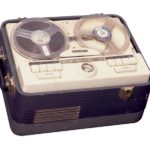
1945 – Grundig was established by Max Grundig

1946 – Released ‘Heinzelmann’, a radio without tubes

1948 – First complete radio “Weltklang” with four tubes and six circuits

1949 – 150,000th radio, the 186 B/GW which became Grundig Boy

1952 – Releases first tape recorder the Reporter 500 L and first Grundig TV

1957 – Acquires a typewriter company in Bayreuth and changes the facility to create the largest tape recorder factory in the world

1957 – Grundig TK 830 R-R recorder released

1958 – TK 20 R-R introduced

1960 – Grundig opens its first factory outside of Germany in Belfast Northern Ireland to produce tape recorders. The plant would last until 1980 and in 1973 the plant director was kidnapped and killed by the IRA.

1962 – New Grundig tape recorder factory opened in Nuremberg-Langwasser. TK 42 R-R recorder introduced

1964 – TK 46 R-R was released.

1967 – Manufacture of compact cassette machines begins

1972 – Grundig GmbH became Grundig AG. Philips electronics begins to buy up shares in Grundig

1984 – Max Grundig has over the management of his company to Philips, who is now the largest stakeholder

1998 –  Grundig leaves the Philips partnership to go back on their own as the company had continued to perform badly and Philips is no longer a significant consumer electronics company

2003 – Grundig AG files for insolvency

2004 – A restructured Grundig Intermedia GmbH opens for business after Grundig’s employees far exceeded sales targets that had been set by the administrators

2007 – Grundig Intermedia GmbH was acquired by Arçelik

2013 – Grundig remains Europe’s only full-range consumer electronics brand

Sources Radio Fidelity and Historisches Lexikon


Less
  • Grundig "reporter" 500l & 700l Full-track-mono  Reel To Reel Tape Recorder 2"Reporter" 500L & 700L
  • Grundig "reporter" 700l Stereo 1/2 Rec/pb Reel To Reel Tape Recorder 0"Reporter" 700L
  • Grundig Cub Stereo  Reel To Reel Tape Recorder 1Cub
  • Grundig Tk 1 "luxus" Mono - Half-track 1/2 Rec/pb Reel To Reel Tape Recorder 0TK 1 "Luxus"
  • Grundig Tk 2 Full-track-mono 1/2 Rec/pb Reel To Reel Tape Recorder 0TK 2
  • Grundig Tk 5 Stereo 1/2 Rec/pb Reel To Reel Tape Recorder 0TK 5
  • Grundig Tk 6l Mono - Half-track 1/2 Rec/pb Reel To Reel Tape Recorder 1TK 6L
  • Grundig Tk 7 Mono - Half-track 1/2 Rec/pb Reel To Reel Tape Recorder 1TK 7
  • Grundig Tk 830 Full-track-mono 1/2 Rec/pb Reel To Reel Tape Recorder 2TK 8/3D
  • Grundig Tk 9 "reporter" Mono - Half-track  Reel To Reel Tape Recorder 0TK 9 "Reporter"
  • Grundig Tk 10 Full-track-mono 1/2 Rec/pb Reel To Reel Tape Recorder 0TK 10
  • Grundig Tk 12 Dual-track-mono 1/2 Rec/pb Reel To Reel Tape Recorder 1TK 12
  • Grundig Tk 14 Full-track-mono 1/2 Rec/pb Reel To Reel Tape Recorder 1TK 14
  • Grundig Tk 14l Full-track-mono 1/2 Rec/pb Reel To Reel Tape Recorder 0TK 14L
  • Grundig Tk 15/3d Dual-track-mono 1/2 Rec/pb Reel To Reel Tape Recorder 0TK 15/3D
  • Grundig Tk 16 Full-track-mono  Reel To Reel Tape Recorder 0TK 16
  • Grundig Tk 17l Stereo 1/2 Rec/pb Reel To Reel Tape Recorder 0TK 17L
  • Grundig Tk 18 Stereo 1/2 Rec/pb Reel To Reel Tape Recorder 0TK 18
  • Grundig Tk 19l Stereo 1/2 Rec/pb Reel To Reel Tape Recorder 1TK 19L
  • Grundig Tk 20 / Tk24 Mono - Half-track 1/4 Rec/pb Reel To Reel Tape Recorder 0TK 20 / TK24
  • Grundig Tk 23 Mono - Half-track 1/4 Rec/pb Reel To Reel Tape Recorder 0TK 23
  • Grundig Tk 23l Mono - Half-track 1/4 Rec/pb Reel To Reel Tape Recorder 0TK 23L
  • Grundig Tk 24 Full-track-mono  Reel To Reel Tape Recorder 0TK 24
  • Grundig Tk 25 Full-track-mono 1/4 Rec/pb Reel To Reel Tape Recorder 0TK 25
  • Grundig Tk 28 Full-track-mono  Reel To Reel Tape Recorder 1TK 28
  • Grundig Tk 35 Mono - Half-track 1/2 Rec/pb Reel To Reel Tape Recorder 1TK 35
  • Grundig Tk 40 Full-track-mono 1/2 Rec/pb Reel To Reel Tape Recorder 1TK 40
  • Grundig Tk 41 Full-track-mono 1/2 Rec/pb Reel To Reel Tape Recorder 1TK 41
  • Grundig Tk 46 Stereo 1/4 Rec/pb Reel To Reel Tape Recorder 2TK 46
  • Grundig Tk 60 & Tk 64 Full-track-mono  Reel To Reel Tape Recorder 1TK 60 & TK 64
  • Grundig Tk 120 Full-track-mono 1/2 Rec/pb Reel To Reel Tape Recorder 0TK 120
  • Grundig Tk 121 Stereo 1/2 Rec/pb Reel To Reel Tape Recorder 0TK 121
  • Grundig Tk 125 Mono - Half-track 1/2 Rec/pb Reel To Reel Tape Recorder 0TK 125
  • Grundig Tk 140 Full-track-mono 1/4 Rec/pb Reel To Reel Tape Recorder 0TK 140
  • Grundig Tk141 Mono - Half-track 1/4 Rec/pb+1/2pb Reel To Reel Tape Recorder 0TK141
  • Grundig Tk 145 Stereo 1/4 Rec/pb Reel To Reel Tape Recorder 0TK 145
  • Grundig Tk 146 Stereo 1/2 Rec/pb Reel To Reel Tape Recorder 0TK 146
  • Grundig Tk 146 Stereo 1/4 Rec/pb Reel To Reel Tape Recorder 0TK 146
  • Grundig Tk 147 Stereo 1/4 Rec/pb+1/2pb Reel To Reel Tape Recorder 0TK 147
  • Grundig Tk 148 Stereo 1/4 Rec/pb Reel To Reel Tape Recorder 0TK 148
  • Grundig Tk 149 Quarter-track Mono 1/4 Rec/pb Reel To Reel Tape Recorder 0TK 149
  • Grundig Tk 200u Full-track-mono 1/2 Rec/pb Reel To Reel Tape Recorder 1TK 200U
  • Grundig Tk 220 Mono - Half-track 1/2 Rec/pb Reel To Reel Tape Recorder 0TK 220
  • Grundig Tk 244 Stereo 1/4 Rec/pb+1/2pb Reel To Reel Tape Recorder 0TK 244
  • Grundig Tk247 De Luxe Stereo Stereo 1/4 Rec/pb+1/2pb Reel To Reel Tape Recorder 0TK247 De Luxe Stereo
  • Grundig Tk247 De Luxe Stereo Stereo 1/4 Rec/pb+1/2pb Reel To Reel Tape Recorder 0TK247 De Luxe Stereo
  • Grundig Tk 248 Stereo 1/4 Rec/pb Reel To Reel Tape Recorder 0TK 248
  • Grundig Tk 400 Automatic Full-track-mono 1/4 Rec/pb Reel To Reel Tape Recorder 0TK 400 Automatic
  • Grundig Tk 545 Stereo 1/4 Rec/pb+1/2pb Reel To Reel Tape Recorder 0TK 545
  • Grundig Tk 600 Stereo 1/4 Rec/pb+1/2pb Reel To Reel Tape Recorder 0TK 600
  • Grundig Tk 745 Stereo 1/4 Rec/pb+1/2pb Reel To Reel Tape Recorder 0TK 745
  • Grundig Tk 819 Mono - Half-track 1/2 Rec/pb Reel To Reel Tape Recorder 0TK 819
  • Grundig Tk 820 “specialist” Full-track-mono 1/2 Rec/pb Reel To Reel Tape Recorder 0TK 820 “Specialist”
  • Grundig Tk 830 Full-track-mono 1/2 Rec/pb Reel To Reel Tape Recorder 2TK 830
  • Grundig Tk 850 Hi-fi Fm Stereo 1/4 Rec/pb Reel To Reel Tape Recorder 0TK 850 Hi-Fi FM
  • Grundig Tk 2200 Full-track-mono 1/2 Rec/pb Reel To Reel Tape Recorder 0TK 2200
  • Grundig Tk 3200 Stereo 1/2 Rec/pb Reel To Reel Tape Recorder 0TK 3200
  • Grundig Tm 8 Full-track-mono 1/2 Rec/pb Reel To Reel Tape Recorder 0TM 8
  • Grundig Tm 45 Full-track-mono 1/4 Rec/pb+1/2pb Reel To Reel Tape Recorder 0TM 45
  • Grundig Tm340 Stereo 1/4 Rec/pb Reel To Reel Tape Recorder 0TM340
  • Grundig Ts 340 Hi Fi Stereo 1/4 Rec/pb Reel To Reel Tape Recorder 1TS 340 Hi Fi
  • Grundig Ts 945 & Ts 925 Stereo 1/4 Rec/pb Reel To Reel Tape Recorder 0TS 945 & TS 925
  • Grundig Ts 1000 Stereo 1/4 Rec/pb Reel To Reel Tape Recorder 0TS 1000
Less
  • Heimstudio Heimstudio Mk 3335 Full-track-mono 1/2 Rec/pb Reel To Reel Tape Recorder 0Heimstudio Mk 3335
  • Heimstudio Heimstudio Mk 45500 Full-track-mono  Reel To Reel Tape Recorder 0Heimstudio Mk 45500
Less
  • Kontakt 1 Full-track-mono 1/2 Rec/pb Reel To Reel Tape Recorder 01
  • Kontakt 11 Full-track-mono 1/2 Rec/pb Reel To Reel Tape Recorder 011
  • Kontakt 1a Full-track-mono 1/2 Rec/pb Reel To Reel Tape Recorder 01a
1932 To 1983
The Körting Radio Werke GmbH began manufacturing radio receivers in 1932 but the origins of the company can be traced to as far back as 1889. By 1938, Körting Radio was one of the largest radio suppliers in Germany employing over 3000 people. They became a television manufacturer later and were one of the earliest companies in Germany to produce colour TVs. From 1954 to 1978 Körting was the house supplier of Neckermann-Versand, a sizable mail-order and retail company in Germany. This enabled the company to produce decent quantities of product that was affordable for the average consumer.     Read More
The Körting Radio Werke GmbH began manufacturing radio receivers in 1932 but the origins of the company can be traced to as far back as 1889.
By 1938, Körting Radio was one of the largest radio suppliers in Germany employing over 3000 people.
They became a television manufacturer later and were one of the earliest companies in Germany to produce colour TVs.
From 1954 to 1978 Körting was the house supplier of Neckermann-Versand, a sizable mail-order and retail company in Germany. This enabled the company to produce decent quantities of product that was affordable for the average consumer.


Less
  • Korting Mt-156 Full-track-mono 1/2 Rec/pb Reel To Reel Tape Recorder 0MT-156
  • Korting Mt157 Stereo 1/4 Rec/pb Reel To Reel Tape Recorder 0MT157
  • Korting Mt 158s Stereo 1/4 Rec/pb Reel To Reel Tape Recorder 0MT 158S
Less
  • Kuba Cherry Full-track-mono 1/2 Rec/pb Reel To Reel Tape Recorder 0Cherry
Less
  • Loewe-opta 409 Stereo 1/4 Rec/pb Reel To Reel Tape Recorder 0409
  • Loewe-opta Optacord-400 Full-track-mono 1/2 Rec/pb Reel To Reel Tape Recorder 0Optacord-400
  • Loewe-opta Optacord 408 Full-track-mono 1/2 Rec/pb Reel To Reel Tape Recorder 0Optacord 408
  • Loewe-opta Optacord 416 Full-track-mono 1/2 Rec/pb Reel To Reel Tape Recorder 2Optacord 416
  • Loewe-opta Optacord 466 Full-track-mono 1/2 Rec/pb Reel To Reel Tape Recorder 0Optacord 466
1873 To Present
The Maihak company was started in 1873 and is still going strong today. The original founder was an eccentric engineer called Hugo Maihak who wanted to make precision scientific mechanisms and instruments – and he did! Today the company mainly makes seismographs. They made high quality precision audio gear for broadcast recording & studio use in the 1950s & early 60s. Very expensive and high quality by all accounts. The company survived two world wars untouched, unbombed but the family were imprisoned by the Nazis in WW2 because they refused to make rocket guidance systems. There is a photo of Read More

The Maihak company was started in 1873 and is still going strong today. The original founder was an eccentric engineer called Hugo Maihak who wanted to make precision scientific mechanisms and instruments – and he did!

Today the company mainly makes seismographs. They made high quality precision audio gear for broadcast recording & studio use in the 1950s & early 60s. Very expensive and high quality by all accounts.
The company survived two world wars untouched, unbombed but the family were imprisoned by the Nazis in WW2 because they refused to make rocket guidance systems.
There is a photo of their factory in Hamburg in 1945 – all around is devastation, buildings completely destroyed by RAF bombing – and the Maihak factory completely untouched.

Maihak was one of the first companies in the world to use transistors.
What look like sub miniature tubes are actually giant transistors – the best of transistorised technology from 1953, large black OC 603s – about twice the size of the OC71 series that appeared in the ’60s.
Apparently in those days transistors were viewed with suspicion, as not many people really knew much about them.

Maihak was a world leader in film sound machines, until 1954 when Nagra took a good piece of the market. Maihak was the only tape recorder approved for use in coal mines as their low-voltage motors posed very little risk of explosion.
Today the company is partly owned by Plessey & Siemens, but it still essentially a family business.

More on Hugo and his company…

Hugo Maihak was born in Myslitz in Upper Silesia in 1858.
He studied an emerging branch of the technical sciences, mechanical engineering, for four years at the Bauakademie Berlin.
He had a preference for precision mechanics and became a gifted scientist and technician.
Fairly quickly after graduation he refined and invented a pressure diagram writer, known as the Maihak indicator, which would become standard equipment for most mechanical engineers.
In the 1880s, after working in Berlin for two years he moved to Hamburg which was the up-and-coming Place for manufacturing and had a port, useful for export. A short stint representing products for the company of machine engineer Georg Klug had him taking the company over in 1890. He began exporting special fittings and machine indicators for industry to England and America and changed the name to H. Maihak Aktiengesellschaft in 1900.
He died in 1912 at the age of 54 and is credited for developing early standards of German craftsmanship.

In 1948 Nordwestdeutscher Rundfunk, Northwest German Broadcasting had been working with Zentraltechnik for their sound equipment and now had high hopes of developing a portable tape recorder. They approached H.Maihak AG who seemed like a perfect fit, with a reputation for production of measuring instruments and precision mechanics. They are were hired and were one of the first German companies to produce modern tape recorders.

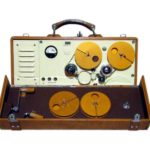
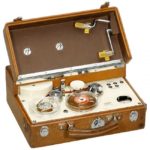
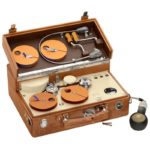
MMK 1, (radio designation R25a) the Maihak reportofon (Maihak magnetic sound Suitcase). Portable tape recorder R25

The MMK 1 was followed by a whole series of successes up to the MMK 7.
The MMK 5 Tonschreiber was built in limited quantities for military use as a voice recorder running at 9.5 cm/s. This was followed by the MMK 6, produced around 1958. This was the first recorder using transistors and was very similar to the tube based MMK 4.

These tape recorders were very high precision devices in the 1950s and worthy of any collectors interest.

Source

Source

Less
  • Maihak Mm-6 Full-track-mono  Reel To Reel Tape Recorder 0MM-6
  • Maihak Mm3 Mono - Half-track 1/2 Rec/pb Reel To Reel Tape Recorder 0MM3
  • Maihak Mmk-3 Full-track-mono 1/2 Rec/pb Reel To Reel Tape Recorder 0MMK-3
  • Maihak Mmk-3 Tr Full-track-mono 1/2 Rec/pb Reel To Reel Tape Recorder 0MMK-3 TR
  • Maihak Mmk-6 Full-track-mono 1/2 Rec/pb Reel To Reel Tape Recorder 0MMK-6
Less
  • Minifon P55 Stereo  Reel To Reel Tape Recorder 5P55
1948 To 2012
Neckermann, a large mail order company, cut a deal with Korting in 1954 for them to supply all their radios, tape recorders and TV production exclusively to the Neckermann group. Körting product would no longer be for available in Germany but they were free to sell their product for export. The specifics of the tape recorder arrangement we do not know as of yet, but a number of tape recorders would be produced over many years branded with the Neckermann name and of course, built by Körting. This arrangement seemed quite unusual so we decided to investigate further and find Read More

Neckermann, a large mail order company, cut a deal with Korting in 1954 for them to supply all their radios, tape recorders and TV production exclusively to the Neckermann group. Körting product would no longer be for available in Germany but they were free to sell their product for export. The specifics of the tape recorder arrangement we do not know as of yet, but a number of tape recorders would be produced over many years branded with the Neckermann name and of course, built by Körting. This arrangement seemed quite unusual so we decided to investigate further and find out what N was about. It turned out to be an interesting story that has an entrepreneur who became an equestrian gold medalist and had a checkered past.

Josef Neckermann (1912-1992) was asked to take over his father’s very successful coal business in 1931 in Würzburg at the age of 16. His father died the same day. In mid-1930s Germany Aryanization of Jewish businesses had begun and the 20 year old Josef made his first acquisition in 1935, a textile store in Würzburg owned by Siegmund Ruschkeewitz.  He was forced to sell his store at 10% of its value to Neckermann. Shortly thereafter Neckermann brought a Nazi member to the store and together they threw Ruschkewitz out. A second bargain-basement purchase followed with Merkur – 130 Employees and 60 sales reps. It was a good time to buy businesses at well below market value and a department store followed, also in Würzburg, the Vetter department store that had previously been Aryanized by the owner. A a new law was passed in June 1938, forfeiting all Jewish businesses to Aryan ownership. Neckermann now targeted the fourth largest textile mail order company in Germany, located in Nuremberg and founded by Karl Amson Joel, grandfather of pianist/singer Billy Joel.

Certain suppliers had began cutting Joels supply off and an unwelcome German plant manager had been installed. The company was now ordered to stamp all  outgoing packages with a “J”. Karl Joel reluctantly sold his company to Josef Neckermann for some 2.3 million Reichsmarks (equivalent to 1/2 Million US dollars today) at less than a fifth of its real value. Joel was forbidden to use his own attorney. When he asked for some assurance that the agreed-upon sum would be paid, he was answered with ominous threats that he would be wiser to look after his own security. Neckerman also took possession of the Joel family house.
The original agreement of 2.3 million marks was later reduced by Neckermann to 1.1 million marks. Before the transaction was completed, Karl Joel fled to Switzerland unpaid and it would be until 1957 before reparation paid him a well under market value settlement at 2 million DM.
With war imminent, Josef Neckermann began looking for government contract opportunities, a prudent decision. Neckermann secured a contract with Fritz Todt, the General Inspector for Construction and supplied blankets and work clothes for the 100,000 workers from 1938 forward. Neckermann was a man of contacts and got close to the textile manufacturer Hans Kehrl , who was to become the economic representative of the Führer and Reich Chancellor from 1934. Neckermann founded the Central Warehouse Association for Clothing (ZLG) at the end of 1941 with Georg Karg, who had also founded his department store in the 1930s through aryanization. ZLG, became a monopoly as Neckermann knew another man of influence, Otto Ohlendorf who he made a silent partner in ZLG and now they were getting inside information on raw materials and transportation. ZLG was supposed to supply all the textile manufacturers fairly with orders but Neckermann was in control and gave his companies preferential treatment.
Another high point in his career was when Albert Speer was appointed Reich Minister for Armaments and Ammunition in early 1942. Neckermann was now designing winter uniforms for the Wehrmacht and on Speers suggestion, presented his collection to Hitler on his 53rd birthday at the Fuehrer’s headquarters in Wolfsschanze. The uniforms were approved and Neckermann produced 2.5 million units for the upcoming winter on the Eastern Front. Eventually Neckermann became the head of the Reich Office for Clothing.
As the second world war came to a close, most of the Neckermann factories had been damaged by bombing with the exception of the Vetter fashion house.
Companies that had been taken over by Aryanization were now in the trusteeship of the Allied Control Council, based on a law passed in August 1945 and the owners were not allowed to resume business or access their properties. In spite of that, Neckermann attempted to re-start his business in Würzburg and to bring two companies of the former ZLG under his control. Things didn’t work out and he was sentenced by a military court in December 1945 to one year in a labor camp for violating the Control Council Act.

Neckermann KG was founded in Frankfurt September, 1948 and now it was time to plan his reentry back into the business world. There was a pent-up demand for consumer goods in the early 1950s and mail-order businesses were rampant with approximately 4000 in existence at the time. Undeterred, when Josef had 450,000 DM. freed up by the Allies from his Würzburg business, it was time to enter the mail-order business.

The first 12 page Neckermann catalog of March 1950, featured 133 inexpensive textile articles and 100,000 were printed. He managed to sell 10 million DM in his first year. By 1953 the catalogue included furniture, leather goods, lamps and radios. Refrigerators,televisions and electronic items including tape recorders were added the next year.
Retailers that sold appliances and electronic devices were now feeling threatened by mail-order and in February 1954, the electrical guild circulated a request to all retailers to refuse to install or repair Neckermann products. The company had been private labelling manufacturers devices and very often sold the same product for 40% less with a new logo, “N” Neckermann took them to court but lost and was forced to set up a service network with 250 mobile technicians and 200 drop-off points. Electrical appliance sales continued to improve.
The catalogue was now 300 pages and released twice a year with a circulation of 2.5 million.
In 1956, they branched out into sales outlets or department stores with the flagship location in Frankfurt.
Neckermann had begun with 107 employees in 1950 and by 1958 there were over 6,000. Neckermann Versand and Quelle Schickedanz (Gustav Schickedanz)dominated mail order in the 1950s.
In 1965, 3,811 people worked in the Frankfurt dispatch center, and a further 14,297 people were employed in the textile factories in Frankfurt, Darmstadt and Essen. Overall, the Neckermann Group generated more than DM 1 billion for the first time this year.

More cheap discounters arrived in the German market in the 1960s and in spite of the fact the Neckermann Group’s sales had grown over two decades, the company was in the red as the margin became too low. Big turnover with small profit was turning out to be a bad recipe. Even as early as 1963, the company’s liabilities were increasing and the banks threatened to stop financing, so Josef put together an IPO. Sales volume continued to increase through the 60s and into the 70s but by 1975 the company was on the verge of bankruptcy. The 1973 oil crisis caused many well-established companies file for bankruptcy, with the demand for consumer goods falling off significantly. Neckermann changed his strategy by increasing prices in the autumn / winter catalogue of 1974 and customers started buying more from the competition, so that plan was discontinued. 1975 marked the companies 25th anniversary they offered 10% off everything in the spring/summer catalogue. Sales grew from 2.9 billion to 3.5 billion DM in 1975, however the mail-order company posted a loss of around 4 million DM.
In the spring 1976, Josef started to negotiate a potential merger with his competition, Walter Deuss of Karstadt and by July it was announced that Karstadt would become a major shareholder in the company. The losses continued through 1976 with a deficit of 7.7 million DM.

The last shareholders’ meeting of Neckermann Versand took place on June 1, 1977, after which Karstadt AG became the new owner.
Josef Neckermann was moved to a post on the supervisory board of the new company for a year and then retired. He then devoted himself exclusively to his “second life’s work”, Deutsche Sporthilfe. His son Peter left the company and Johannes Neckermann was the last to leave in August 1978. Both sons emigrated to the USA in 1980 and 1981.

Josef Neckermann was a German equestrian and Olympic champion. He won Olympic medals at four different Olympics, in 1960, 1964, 1968 and 1972. Later Neckermann became a member of the West German National Olympic Committee.

A Documentary called The Joel Files was made about Billy Joel’s family and their struggles to survive— and escape—the rise of the Nazis in Germany.

Source 1

Source 2

Source 3


Less
  • Neckermann 1 Full-track-mono 1/2 Rec/pb Reel To Reel Tape Recorder 11
  • Neckermann Körting Mt 118 Full-track-mono 1/2 Rec/pb Reel To Reel Tape Recorder 0Körting MT 118
  • Neckermann Studio 7244 Stereo 1/4 Rec/pb Reel To Reel Tape Recorder 0Studio 7244
Less
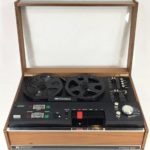
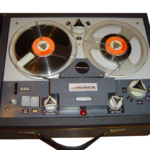
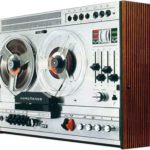
  • Neukord 1 Full-track-mono 1/2 Rec/pb Reel To Reel Tape Recorder 01
1923 To
1923 The original company, Radio H. Mende GmbH, was founded in by Otto Hermann Mende Germany 1947 Martin Mende (the founder’s son) created a new company under the name Norddeutsche Mende-Rundfunk GmbH, later changed to Nordmende 1950’s Nordmende became one of the prominent German manufacturers of radios, televisions, tape recorders and record players in the 1950s and 1960s. 1960’s The company makes a variety of four track and eight track reel to reel recorders 1974 Nordmende introduces its Colour vision CSS super 8mm video recorder 1977 Nordmende sold to the French Thomson Brandt company 1980s The company launched a range Read More
1923 The original company, Radio H. Mende GmbH, was founded in by Otto Hermann Mende Germany

1947 Martin Mende (the founder’s son) created a new company under the name Norddeutsche Mende-Rundfunk GmbH, later changed to Nordmende

1950’s Nordmende became one of the prominent German manufacturers of radios, televisions, tape recorders and record players in the 1950s and 1960s.

1960’s The company makes a variety of four track and eight track reel to reel recorders

1974 Nordmende introduces its Colour vision CSS super 8mm video recorder

1977 Nordmende sold to the French Thomson Brandt company

1980s The company launched a range of white goods including fridges, freezers, washing machines, and dishwashers, alongside a revamped range of flat-screen TVs and stereos.

Less
  • Nordmende 8002 T40 Stereo 1/4 Rec/pb Reel To Reel Tape Recorder 08002 T40
  • Nordmende Titan Stereo 1/4 Rec/pb Reel To Reel Tape Recorder 0Titan
  • Nordmende Titanette Stereo 1/2 Rec/pb Reel To Reel Tape Recorder 0Titanette
Less
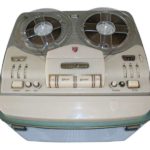
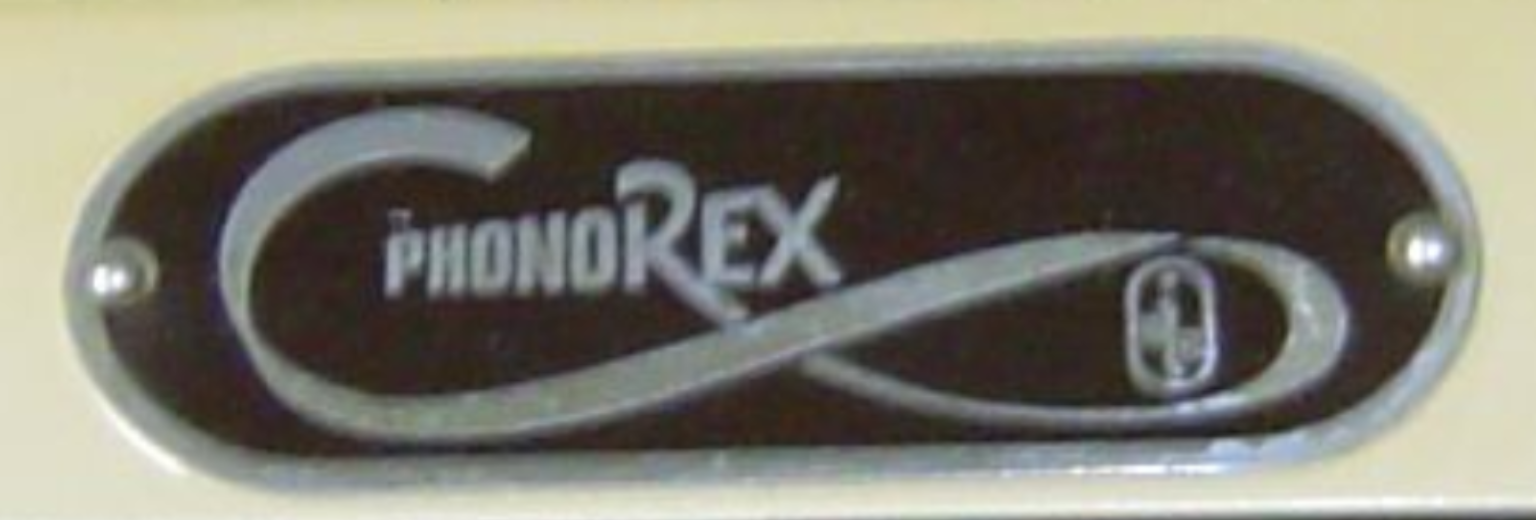
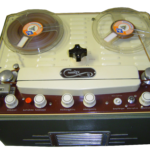
  • Phonorex 1a Full-track-mono 1/2 Rec/pb Reel To Reel Tape Recorder 01a
Less
  • Phonotrix 1 Full-track-mono  Reel To Reel Tape Recorder 01
  • Phonotrix Phonotrix 88 Full-track-mono 1/2 Rec/pb Reel To Reel Tape Recorder 0Phonotrix 88
Rundfunk- Und Fernmelde-Technik manufactured tape recorders in East Germany. The bulk of the engineering was done in Hungary.

Rundfunk- Und Fernmelde-Technik manufactured tape recorders in East Germany. The bulk of the engineering was done in Hungary.

Less
  • Rft Bg 4 Full-track-mono 1/2 Rec/pb Reel To Reel Tape Recorder 0BG 4
  • Rft Bg 26 Mono - Half-track 1/2 Rec/pb Reel To Reel Tape Recorder 0BG 26
  • Rft Smaragd Bg 20-5 Dual-track-mono  Reel To Reel Tape Recorder 0Smaragd BG 20-5
  • Rft Smaragd Bg 20/3 Mono - Half-track 1/2 Rec/pb Reel To Reel Tape Recorder 0Smaragd BG 20/3

Rufa

Less
  • Rufa 119k And 203 Full-track-mono 1/2 Rec/pb Reel To Reel Tape Recorder 0119K and 203
1835 To Present
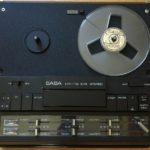
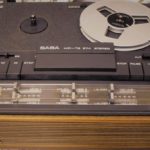
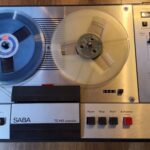
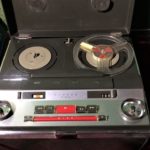
1835 SABA began as a clock-maker in Triberg, Germany, in 1835 by Benedikt Schwer. 1918 The workshop moved to Villingen and manufactured headphones, radio parts, and receivers 1931 SABA produced more than 100,000 units of the SABA Radio Type S-35 and introduced dynamic loudspeakers 1939 Saba introduced an automatic radio where the user does not have to “tune in” the station WW2 1945  April 19 the Allies dropped two bombs on Saba destroying the recently built factory buildings & the administration building lost its roof 1949  SABA rebuilds and now has over a thousand people employed, similar to prewar, with Read More

1835 SABA began as a clock-maker in Triberg, Germany, in 1835 by Benedikt Schwer.

1918 The workshop moved to Villingen and manufactured headphones, radio parts, and receivers

1931 SABA produced more than 100,000 units of the SABA Radio Type S-35 and introduced dynamic loudspeakers

1939 Saba introduced an automatic radio where the user does not have to “tune in” the station

WW2 1945  April 19 the Allies dropped two bombs on Saba destroying the recently built factory buildings & the administration building lost its roof

1949  SABA rebuilds and now has over a thousand people employed, similar to prewar, with sales of approximately 21 million DM

1956 Saba begins making tape recorders that were fully automatic with push button controls

1961  SABA offers “line-free television” branded “Sabavision”, which for the time being was patented and is now one of the most significant TV providers and is now one of the most significant TV providers in Germany employing 4500. However the company is not looking financially very good at this point

1963 Saba introduced the Sabafone TK 125-4 dictating machine, able to record 12 hours of audio on a single reel-to-reel

1964 “SABAmobil” is introduced, a tape-radio combination for cars, but the the recently introduced Philips cassette would make the future for this format limited. It ran at 3 3/4 ips on 3″ reels and the 1/4″ tapes could be removed from the cartridge and played on regular recorders

Releases the Sabafone TK 125-S and TK 220-S, promising high quality recording and the ability to do “trick” recording with easy push button controls

1968 The best R-R Recorder Saba built, the 600 SH is released, which would be sold in small quantities for 2 years

SABA sold the majority of the company to GTE, an American telephone company

1971  The Hi Fi-TG543 tape recorder was introduced by SABA. It was a 4 track 2 channel recorder with a built in loudspeakers

1976  Last R-R Recorders are produced TG574 & TG674,  but would be still marketed for a few more years with the remaining inventory

1980 GTE left consumer electronic distribution and Thomson-Brandt purchased SABA

Less
  • Saba 300 Stereo 1/4 Rec/pb Reel To Reel Tape Recorder 0300
  • Saba 305s Stereo 1/4 Rec/pb Reel To Reel Tape Recorder 0305S
  • Saba 544 G Stereo 1/4 Rec/pb Reel To Reel Tape Recorder 1544 G
  • Saba 600 Sh Stereo 1/2 Rec/pb Reel To Reel Tape Recorder 6600 SH
  • Saba Sabafon 300 Stereo 1/4 Rec/pb Reel To Reel Tape Recorder 0Sabafon 300
  • Saba Sabafon Tk 75 Dual-track-mono 1/2 Rec/pb Reel To Reel Tape Recorder 0Sabafon TK 75
  • Sabafon TK 230-S
  • Saba Tg-543 Stereo 1/4 Rec/pb Reel To Reel Tape Recorder 0TG-543
  • Saba Tg-574 Stereo 1/4 Rec/pb Reel To Reel Tape Recorder 0TG-574
  • Saba Tg-674 Stereo 1/4 Rec/pb Reel To Reel Tape Recorder 0TG-674
  • Saba Tg 443 Mono - Half-track 1/4 Rec/pb Reel To Reel Tape Recorder 0TG 443
  • Saba Tk-220s Stereo 1/4 Rec/pb Reel To Reel Tape Recorder 0TK-220S
1935 To 1960
Sander & Janzen (SAJA) started off in the mid-1930s making record cutting machines. Into the 1940s they were manufacturing turntables such as the 1949 Schimon / Sander & Janzen studio turntable. Apparently by the mid-50s they were the go to source for studio tape recorders in Germany. They also produced consumer models which you can see below. In 1960, the company was taken over by Graetz. So far we have not found any Saja recorders that look like studio devices.

Sander & Janzen (SAJA) started off in the mid-1930s making record cutting machines. Into the 1940s they were manufacturing turntables such as the 1949 Schimon / Sander & Janzen studio turntable. Apparently by the mid-50s they were the go to source for studio tape recorders in Germany. They also produced consumer models which you can see below. In 1960, the company was taken over by Graetz.

So far we have not found any Saja recorders that look like studio devices.

Less
  • Saja Dg5 Dual-track-mono 1/2 Rec/pb Reel To Reel Tape Recorder 0DG5
  • Saja Mk 5 Export   Reel To Reel Tape Recorder 1Mk 5 Export
  • Saja Mk 40/42 Full-track-mono  Reel To Reel Tape Recorder 0Mk 40/42
  • Saja Mk Iv Full-track-mono  Reel To Reel Tape Recorder 1Mk IV
1880 To 1990s
Perhaps the most unique or unusual tape recorder ever invented, the Schaub-Lorenz Music Center could record 46 hours music on a wide tape. Five years of development and a big price tag translated to an unusual story of failure. Schaub-Lorenz Tape Recorder Production in 1961, Graetz KG was purchased by Standard Elektrik Lorenz AG (SEL) and they consolidated some teams that would do the engineering for a new consumer electronics division branded as Schaub-Lorenz. From a historical perspective, it’s useful to know that in 1959, Graetz had bought another consumer electronics company, Saja. The teams that had previously worked in Read More

Perhaps the most unique or unusual tape recorder ever invented, the Schaub-Lorenz Music Center could record 46 hours music on a wide tape. Five years of development and a big price tag translated to an unusual story of failure.

Schaub-Lorenz Tape Recorder Production

in 1961, Graetz KG was purchased by Standard Elektrik Lorenz AG (SEL) and they consolidated some teams that would do the engineering for a new consumer electronics division branded as Schaub-Lorenz.
From a historical perspective, it’s useful to know that in 1959, Graetz had bought another consumer electronics company, Saja. The teams that had previously worked in the tape recorder division were relocated to the Graetz factory in Westphalia. After the move, it turned out strangely, that Saja had not provided adequate technical or production drawings for the previous tape recorder efforts so they were back to the drawing board. The former boss at Saja’s plant in Duderstadt was the only guy that really knew everything about the older tape recorders, but was no longer available. A strange transition. So for almost 2 years they attempted to get back into production, without success. But some new talent was just around the corner as 4 engineers from East Germany had escaped and were in a refugee camp in West Berlin. These were tape recorder guys, that had worked for an East German company, Funkwerk. They were hired and moved to Westphalia and it was around this time in 1960, that development of the Schaub Lorenz Music Centre began. The idea or concept this new tape recorder had arrived with Friedrich Knochenhauer who was planning it’s possibilities in 1959 at ‘Funkwerk Köpenick’ back in East Berlin.
This unique tape recorder had some serious engineering challenges as the tape had to be very large at 10 cm wide and was 150 m in length. Elasticity while preserving strength was the issue and no such tape had ever been produced. PVC was the first experiment and was lacking smooth tape transport. Polyester was the next choice. There seems to be no info to what the final tape solution was. With this length of wide tape, the new machine could record 46 hours of music!
A huge engineering effort with multiple manufacturing processes did finally result in production machines, however they determined that mass production was not a possibility as these machines were too complex. After five years of product development, two models were released in 1965 at the Hannover Messe, the 5001 & 5005 and later a 120v export model for the US, the 6000.
Approximately 1500 Schaub Lorenz Music Centers were produced and priced for the rich and famous. These were sold in Germany, the UK and American markets. Sales were sluggish at the original steep prices and then they were discounted significantly, with many sold in the UK.
5001- The most popular, a stereo table model with 126 tracks

5005- Console model with black metal stand, a turntable and 4-band FM/AM radio with an alphanumeric dial. With similar but not identical electronics to the 5001, the mono 5005 radiogram models were more reliable than the 5001. A 5012 mixer was listed as an accessory.

6000- Stereo tape recorder with 81 tracks for the US export market at 120V.

Apparently these unusual tape recorders were not very reliable but are still serviceable. Refer to the source below for more info.

The Schaub-Lorenz brand continued well into the 70s, manufacturing portable radios and a variety of other product.

Source – Some great research posted on this website

Promotional Material – April 1965 brochure

History

1880 – Carl Lorenz, established as C. Lorenz Aktiengesellschaft or C. Lorenz AG, a telegraph construction company in Berlin, Germany.

1921 – George van Schaub established the company Schaub in Berlin

1923 – C. Lorenz AG starts manufacturing radios

1930s – International Telephone and Telegraph (ITT) acquired C. Lorenz and Standard Electric

1940 – C. Lorenz AG purchased the Schaub Apparatebau GmbH

1950s – Starts manufacturing tape recorders.

1952 – Introduced “Illustra”, the first color television set in Europe.

1961 – Schaub-Lorenz brand introduced

1965 – Schaub Lorenz releases the 5001 Music Center (with 46 hours of playback)and 5005 ‘radiogram’ model.

1967 – Discontinues production of the Music Center. Becomes biggest German manufacturer of portable radios

1990 – General Trading bought the Schaub Lorenz brand.

Less
  • Schaub-lorenz 5001 Stereo  Reel To Reel Tape Recorder 05001
  • Schaub-lorenz 5005 Full-track-mono  Reel To Reel Tape Recorder 05005
  • Schaub-lorenz 6000 Stereo 1/2 Rec/pb Reel To Reel Tape Recorder 06000
  • Schaub-lorenz Sl 200 Stereo 1/4 Rec/pb Reel To Reel Tape Recorder 0SL 200
1903 To Present
1903 – Siemens & Halske and AEG founded “Telefunken Gesellschaft für drahtlose Telegraphie mbH” (Wireless Telegraphy Company Limited) for advancing wireless telegraphy together. 1928 – V-41 first push-pull tube sound amplifier for the German Radio Network 1932 – Added record players to product line. 1935 –“K1 Magnetophon” world’s first practical tape recorder and magnetic tape, presented in the Eighth Grand German Radio Exhibition in Berin. 1936 – World’s first sports broadcast using Telefunken Ikonoskop camera. 1939 – “PAL” first serial television of the German 1950 – Teleport I and II, first portable mobile radio devices Post World War II 1951 Read More
1903 – Siemens & Halske and AEG founded “Telefunken Gesellschaft für drahtlose Telegraphie mbH” (Wireless Telegraphy Company Limited) for advancing wireless telegraphy together.

1928 – V-41 first push-pull tube sound amplifier for the German Radio Network

1932 – Added record players to product line.

1935 –“K1 Magnetophon” world’s first practical tape recorder and magnetic tape, presented in the Eighth Grand German Radio Exhibition in Berin.

1936 – World’s first sports broadcast using Telefunken Ikonoskop camera.

1939 – “PAL” first serial television of the German

1950 – Teleport I and II, first portable mobile radio devices

Post World War II

1951 – First television, the Type FE 8.

1954 – Released Magnetophon M5

1956 – First Traffic Radar System was introduced.

1957 – Magnetophon KL 35 and T 9

1958 – Magnetophon KL 65 and KL75

1959 – Magnetophon 85 and KL75/15. Introduced super computers TR4 and TR 440.

1960 – Magnetophon 76 and 77

1961 – Telefunken M 24 was released.

1962 – Produced M 95, M 96, M 97 & M 98

1963 – Magnetophon 55 and 85 De-Luxe

1965 – Magnetophon 104 and 300

1966 – Magnetophon 203 and 204

1967 – Telefunken and AEG merged. Released M10A ¼ tube stereo master tape machine

1969 – Magnetophon 204 TS, AEG-Telefunken’s two-millionth tape recorder

1970 – World premiere of audio-visual System TED (TelevisionDisc), creation of the mechanical digital Data Storage Device, the Mini-Disc.

1979 – Renamed as “AEG-Telefunken AG”.

1988 – Developed version of the Two-way Radio for Lufthansa Airlines.

Less
  • Telefunken Bayreuth Duitsland Stereo 1/2 Rec/pb Reel To Reel Tape Recorder 0Bayreuth Duitsland
  • Telefunken Kl 15 Stereo 1/2 Rec/pb Reel To Reel Tape Recorder 0KL 15
  • Telefunken M5 Stacked/inline 1/2 Rec/pb Reel To Reel Tape Recorder 3M5
  • Telefunken M5a Stacked/inline 1/2 Rec/pb Reel To Reel Tape Recorder 0M5a
  • Telefunken M 10 Stacked/inline 1/2 Rec/pb Reel To Reel Tape Recorder 1M 10
  • Telefunken M 12 Stacked/inline 1/2 Rec/pb Reel To Reel Tape Recorder 1M 12
  • Telefunken M15 A Stacked/inline 1/2 Rec/play+1/4pb Reel To Reel Tape Recorder 0M15 A
  • Telefunken M24 Dual-track-mono 1/2 Rec/pb Reel To Reel Tape Recorder 2M24
  • Telefunken M 28a Stereo 1/2 Rec/pb Reel To Reel Tape Recorder 9M 28A
  • Telefunken M 28c Stacked/inline 1/2 Rec/pb Reel To Reel Tape Recorder 0M 28C
  • M36
  • Telefunken M96 Dual-track-mono 1/4 Rec/pb Reel To Reel Tape Recorder 0M96
  • Telefunken M 96 Stacked/inline 1/2 Rec/pb Reel To Reel Tape Recorder 0M 96
  • M 97 and M 98
  • Telefunken M 201 Dual-track-mono 1/4 Rec/pb Reel To Reel Tape Recorder 0M 201
  • Telefunken M203 & M203 De Luxe Stereo 1/4 Rec/pb Reel To Reel Tape Recorder 0M203 & M203 de Luxe
  • M 205 and M 207
  • Telefunken M 212 Stereo 1/4 Rec/pb Reel To Reel Tape Recorder 0M 212
  • M 230
  • Telefunken M 250 Stereo  Reel To Reel Tape Recorder 1M 250
  • Telefunken M 291 Hi-fi Stereo 1/2 Rec/pb Reel To Reel Tape Recorder 0M 291 Hi-Fi
  • Telefunken M 302 Stereo 1/4 Rec/pb Reel To Reel Tape Recorder 0M 302
  • Telefunken M 501 Full-track-mono 1/4 Rec/pb Reel To Reel Tape Recorder 0M 501
  • Telefunken M 3000 Hi-fi Stereo 1/4 Rec/pb+1/2pb Reel To Reel Tape Recorder 0M 3000 Hi-Fi
  • Telefunken Magnetephon 2000 Hi-fi Stereo 1/4 Rec/pb Reel To Reel Tape Recorder 0Magnetephon 2000 Hi-Fi
  • Telefunken Magnetophon 55 Stacked/inline 1/2 Rec/pb Reel To Reel Tape Recorder 0Magnetophon 55
  • Telefunken Magnetophon 76 Stereo 1/4 Rec/pb Reel To Reel Tape Recorder 0Magnetophon 76
  • Telefunken Magnetophon 77 Stacked/inline 1/2 Rec/pb Reel To Reel Tape Recorder 1Magnetophon 77
  • Telefunken Magnetophon 85 Mono - Half-track 1/2 Rec/pb Reel To Reel Tape Recorder 0Magnetophon 85
  • Telefunken Magnetophon 85 De-luxe Full-track-mono 1/4 Rec/pb Reel To Reel Tape Recorder 0Magnetophon 85 De-Luxe
  • Telefunken Magnetophon 104 Stacked/inline 1/2 Rec/pb Reel To Reel Tape Recorder 0Magnetophon 104
  • Magnetophon 105 & 106
  • Telefunken Magnetophon 204 Ts Stereo 1/4 Rec/pb Reel To Reel Tape Recorder 0Magnetophon 204 TS
  • Telefunken Magnetophon 300 Mono - Half-track 1/2 Rec/pb Reel To Reel Tape Recorder 2Magnetophon 300
  • Telefunken Magnetophon 440 Hifi Stereo 1/4 Rec/pb+1/2pb Reel To Reel Tape Recorder 0Magnetophon 440 HiFi
  • Telefunken Magnetophon 443 Hi-fi Stereo 1/4 Rec/pb+1/2pb Reel To Reel Tape Recorder 0Magnetophon 443 Hi-fi
  • Telefunken Magnetophon Kl 35 Stacked/inline 1/2 Rec/pb Reel To Reel Tape Recorder 1Magnetophon KL 35
  • Telefunken Magnetophon Kl 65 Stacked/inline 1/2 Rec/pb Reel To Reel Tape Recorder 0Magnetophon KL 65
  • Telefunken Magnetophon Kl 75 Stacked/inline 1/2 Rec/pb Reel To Reel Tape Recorder 1Magnetophon KL 75
  • Telefunken Magnetophon Kl 75/15 Stacked/inline 1/2 Rec/pb Reel To Reel Tape Recorder 1Magnetophon KL 75/15
  • Telefunken Magnetophon M204e Stereo 1/4 Rec/pb Reel To Reel Tape Recorder 0Magnetophon M204E
  • Telefunken Magnetophon T9 Stacked/inline 1/2 Rec/pb Reel To Reel Tape Recorder 0Magnetophon T9
  • Telefunken M Studio 4 Stereo 1/4 Rec/pb Reel To Reel Tape Recorder 0M Studio 4
  • Telefunken Studio 22 & Studio 44 Stereo 1/2 Rec/pb Reel To Reel Tape Recorder 0Studio 22 & Studio 44
Less
  • Teltape Model 1 Stacked/inline 1/2 Rec/pb Reel To Reel Tape Recorder 1Model 1
Less
  • Tonmeister Opzet Full-track-mono 1/2 Rec/pb Reel To Reel Tape Recorder 0opzet
1934 To Present
1892 – Edmond Uher was born in Sibiu / Hungary 1908 – Uher made his first invention a double carburetor. 1928 – Established contacts with MAN Druckmaschinen AG and produced phototypesetting machines 1930 – Uher invented the “Uhertype process” wherein printing templates no longer had to be cast in lead, but could be copied on film. 1934 – Founded the Uher & Co. in Munich 1953 – Established the UHER Werke München GmbH as manufacturer of gear and accessories for the automotive and machine industries. 1955 – Introduces Uher 95 tape recorder 1957 Introduces the 295 model which was portable Read More
1892 – Edmond Uher was born in Sibiu / Hungary

1908 – Uher made his first invention a double carburetor.

1928 – Established contacts with MAN Druckmaschinen AG and produced phototypesetting machines

1930 – Uher invented the “Uhertype process” wherein printing templates no longer had to be cast in lead, but could be copied on film.

1934 – Founded the Uher & Co. in Munich

1953 – Established the UHER Werke München GmbH as manufacturer of gear and accessories for the automotive and machine industries.

1955 – Introduces Uher 95 tape recorder

1957 Introduces the 295 model which was portable and used small reels

1960 Introduces 720 and Uher Universal which were similar in form to the 295

1961-1963– Increased its sales of tape recorders by 362%.

1961 – Released 500, 501, and 502 mono tape recorders . Report 4000 (Stereo)

1962 The Uher 4000 was produced

1967 – Launches Report 4400 R-R

1968 Uher introduced the Royal Delux and Uher Variocord 263. These were larger machines with the reels vertically mounted, designed for the professional user

1973 Saul Mineroff, an American Uher dealer, testifies that the Richard Nixon Watergate tapes were on an Uher 5000

1973 – Report 4200 R-R was produced

1974 – UHER Werke München KG was sold to Assmann in Bad Homburg.

1976 – SG 630 R-R released

1978 – SG 631 R-R released and manufactured until 1987.

1980’s The Uher brand of is purchased by Assmann Electronics

1996 – Assmann and UHER were split up into the separate companies as UHER GmbH, ATIS Systems GmbH, UHER Electronic GmbH and UHER Informatik GmbH .

Less
  • Uher 295 Full-track-mono 1/2 Rec/pb Reel To Reel Tape Recorder 0295
  • Uher 714 Stereo 1/4 Rec/pb Reel To Reel Tape Recorder 0714
  • Uher 720 Full-track-mono 1/2 Rec/pb Reel To Reel Tape Recorder 0720
  • Uher 724 Stereo 1/4 Rec/pb Reel To Reel Tape Recorder 0724
  • Uher 22 And 24 Stereo 1/2 Rec/pb Reel To Reel Tape Recorder 022 and 24
  • Uher 514 & 524 Full-track-mono 1/2 Rec/pb Reel To Reel Tape Recorder 0514 & 524
  • Uher 722l & 723l Full-track-mono 1/2 Rec/pb Reel To Reel Tape Recorder 0722L & 723L
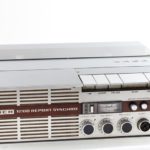
  • Uher 1200 Report Synchro Stereo 1/2 Rec/pb Reel To Reel Tape Recorder 01200 Report Synchro
  • Uher 4000 Report Ic Full-track-mono 1/2 Rec/pb Reel To Reel Tape Recorder 14000 Report IC
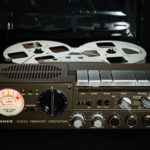
  • Uher 4000 Report Monitor Mono - Half-track 1/2 Rec/pb Reel To Reel Tape Recorder 04000 Report Monitor
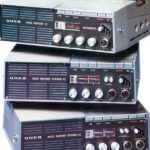
  • Uher 4000, 4200 Report Ic, 4400 Stereo Ic Stereo 1/4 Rec/pb Reel To Reel Tape Recorder 04000, 4200 Report IC, 4400 Stereo IC
  • Uher 4000s Report Stereo 1/2 Rec/pb Reel To Reel Tape Recorder 14000S Report
  • Uher 6000 Report Universal Full-track-mono 1/2 Rec/pb Reel To Reel Tape Recorder 06000 Report Universal
  • Uher 7000d Stereo 1/4 Rec/pb Reel To Reel Tape Recorder 07000D
  • Uher 8000 Royal Stereo Stereo 1/4 Rec/pb Reel To Reel Tape Recorder 18000 Royal Stereo
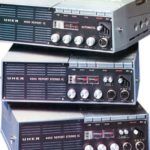
  • Uher Report Monitor 4200 And 4400 Stereo 1/4 Rec/pb Reel To Reel Tape Recorder 0Report Monitor 4200 and 4400
  • Uher Royal De Luxe Stereo 1/4 Rec/pb Reel To Reel Tape Recorder 1Royal De Luxe
  • Uher Sg 510 Stereo 1/4 Rec/pb Reel To Reel Tape Recorder 1SG 510
  • Uher Sg 560 'royal' Stereo 1/4 Rec/pb Reel To Reel Tape Recorder 1SG 560 'Royal'
  • Uher Sg 561 Royal Stereo 1/4 Rec/pb Reel To Reel Tape Recorder 0SG 561 Royal
  • Uher Sg 630 'logic' Stereo 1/4 Rec/pb Reel To Reel Tape Recorder 0SG 630 'Logic'
  • Uher Universal Full-track-mono 1/2 Rec/pb Reel To Reel Tape Recorder 1Universal
  • Uher Universal 5000 Full-track-mono 1/2 Rec/pb Reel To Reel Tape Recorder 0Universal 5000
  • Uher Varicord 263 Stereo Stereo 1/4 Rec/pb Reel To Reel Tape Recorder 0Varicord 263 stereo

VEB

Less
  • Veb Rft Bg22 Full-track-mono 1/2 Rec/pb Reel To Reel Tape Recorder 1RFT BG22

If you know of any other models that AEG produced

Please Submit

If you know of any other Reel to Reel Tape Recorders manufacturers from germany

Please Submit
Reel Reel Logo

Copyright © 2023 Reel-Reel.com - All Rights Reserved - Terms and Conditions | Privacy Policy

Get Started


In order to use this feature, you need register and become a member.

Already a member? Login Register here
Reel Reel Logo
First visit to the website? A few things you can do here...

Research Reel Tape Recorders View All Recorders

Looking to Sell a Reel Tape Recorder ? Sell Now

Looking to Buy a Reel Tape Recorder? R-R's For Sale