
Technical Details
Brand: Tandberg
Model:9200XD
Category:Mid High Fidelity
Application:Consumer
Electronics:Solid State
Equalization:IEC
Country of Manufacture:Norway
Tracks:1/4 Rec/PB
Speeds: 1 7/8, 3 3/4, 7 1/2
Max Reel Size("): 7"
Number of heads: 4
Dimension: 15¾ x 16¼ x 5½ " (413 x 410 x 140mm)
Head Composition: Permalloy, Ferrite
Head Configuration: Stereo
# Motors: 3
Auto Reverse?:No
Voltage(s): 110-120v, 220-240v
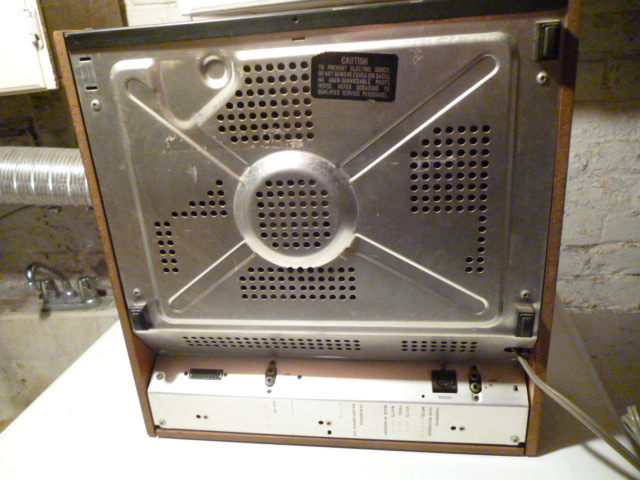
Outputs: RCA, DIN, 1/4" Headphone
Frequency Response:30Hz - 26kHz - 7½ ips - 32Hz - 20kHz - 3¾ ips:
Wow and Flutter:.09% - 7½ ips: - .15%. 3¾ ips ( W.R.M.S.)
Signal-to-Noise Ratio:65 dB - 73 dB (Dolby B)
Sound quality rating:8 / 10
Long-term reliability rating: 5/ 10
Noise Reduction: Dolby B
Weight: 34lbs (15.5kg)
Additional Details
Description
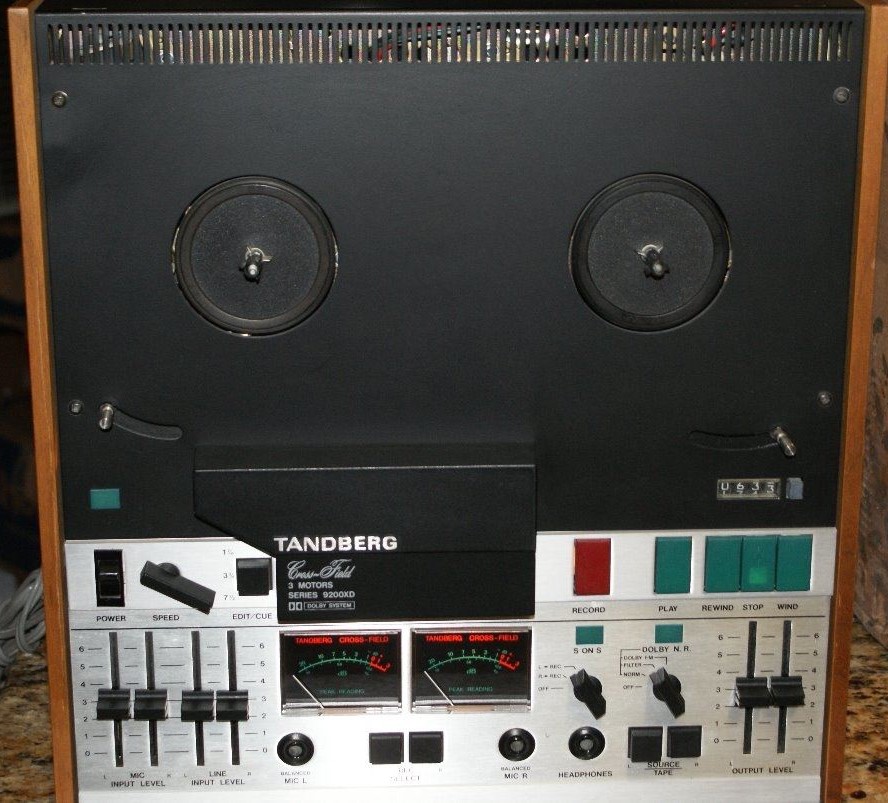
The Tandberg 9200XD series was developed from the series 9000X and featured three motors, three speeds and four heads (3 + crossfield head). It was, apart from the Dolby system, very similar to its predecessor.
Another model, the 9100 X, was identical to the 9200 XD but without the Dolby system.
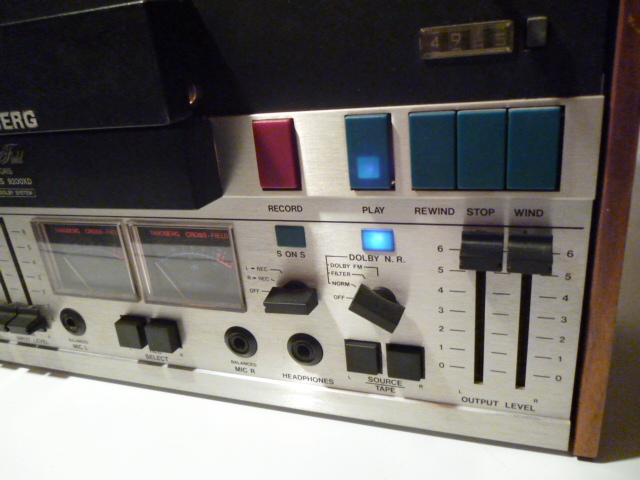
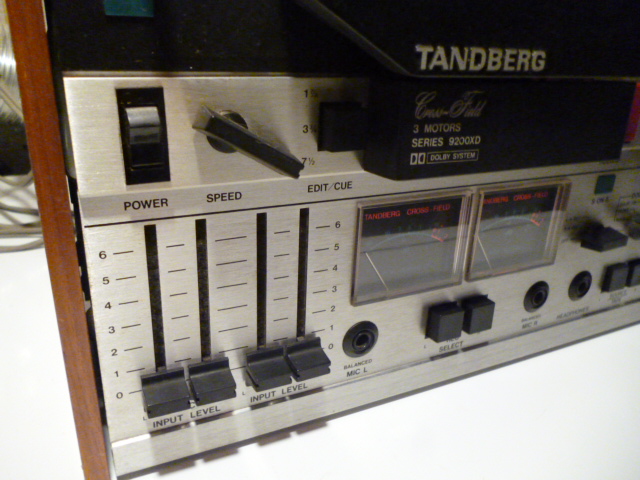
Other features included: Sound-on-sound. edit/cue enabled listening to the tape when fast winding/rewinding. Remote control available and line/mic mixing.
The 9200 XD was available in either half track (9221XD) or quarter-track (9241XD) versions and optional accessories included suitcase, dust cover and brackets for 19″ rack mounting.
Tandbergs promotional material included references to test reports- Stereo review August 1973 – Tandbergs cross field recording technique extends frequency response and improves signal to noise ratios and was the equivalent of the best figures we had ever obtained on a consumer tape machine.
High Fidelity October 1973 said Tandberg already gives you the extra 10 dB of S/N claimed by the Dolby B process… Performance Without Dolby is similar to most decks with Dolby.
The 9200 and the 10XD used early logic ICs which are prone to failure. Apparently these can be found in the Russian market if you know about ICs and can cross-reference them.
Additional Info
Here’s a summary of 9200 service info found on Tapeheads
1. Main issue is usually tantalum red drop capacitors – replace them all. Early logic ICs also fail. It is easy to replace them all as there are lots on ebay selling old Russian military stock of 511 series logic, which is full replacement for H102 or H202 ICs. Here is a cross reference and now many you need :
K511ЛA1 – H102 x 6
K511ЛA2 – H103 x 4
K511ЛA4 – H104 x 1
K511ЛИ1 – H109 x 3(4)
2. One of the transistors that causes a solenoid to pull-in failed by having very low beta. It was either Q3 or Q6. I believe when I pulled it and measured it’s gain, it was around “2”. Likely it needs to be in the range of 100 – 200, or the logic IC cannot supply enough current to cause the solenoid to pull-in. Likely those old logic IC’s can only provide 3 to 5 mA. The transistor really drives the load.
The circuit uses a high peak surge to pull in the solenoid which then lowers to keep it pulled in or maintained. Constant surge of those underrated and likely underpowered for the task TO-5 parts damages them over time, and it looks like the logic chip has failed, but it might be those transistor drivers…
I think I used a BD-237, which is an 80 Volt / 2 Amp NPN with a Beta of 150-200 to replace it. The original Q3 and Q6 parts may only be rated at 1/2 an amp, and is more or less underpowered for the task, at best.
3. “Tropical fish” mullard capacitors (not in signal path) many of them have cracks in epoxy at leads, looks like corrosion could work the way in. I replaced some of them just in case.
Speed tolerance: 0.7% / Crosstalk: mono: 60 dB, stereo: 50 dB / Distortion: from tape at 0 dB, 400 Hz: 3% / Rewind speed: 1200 ft reel – 55 seconds. 1800ft reel – 71 seconds / Inputs: microphone (balanced): 200ohms, 0.23-35mV radio: 50K, 8mV-1.2V line: 200K, 30mV-5V / Outputs: radio: 5K, 0.775 V line: 150 ohm, 1.5V headphones: 8ohm, 5 mW. / Half or quarter-track stereo versions
4. Reel Tables (Plastic parts)
3D printing to get better reel holder parts which are plastic and vulnerable to breakage


