


In order to use this feature, you need register and become a member.
Already a member? Login Register hereSony Reel to Reel Tape Recorders

1946 To Present
Company Description Submit New Info
Sept. 1945 Masaru Ibuka established “Tokyo Tsushin Kenkyujo”(Totsuken), or “Tokyo Telecommunications Research Institute” with old friend Akio Morita. Tokyo Tsushin Kogyo, perhaps a short form, is the name on some of the early tape recorders made up until 1954.
1946 The company began experimenting with wire recording and were able to see a demonstration of a Wilcox-Gay tape recorder. The NHK (national broadcasting station) asked them to convert military-use wireless equipment into relay receivers for broadcasting applications, to restore a national broadcasting network. The company relocated to a new factory at Gotenyama, in Shinagawa.
1947- 48 Impressed with an American wire recorder, Totsuko built their own. A friend in the United States gave Morita a Webster recorder kit that used stainless steel wire. Nobutoshi Kihara, an ex-student of Ibuka’s at the Mechanical Engineering Department of Waseda University completed the kit assembly with an amplifier.
While still working on the wire recorder, a member of the Civil Information and Education (CIE) section showed them a tape recorder. The sound was remarkably better than that of the wire recorder, and Ibuka and Morita resolved to make a tape recorder no matter how difficult it might be. The Totsuko engineers began experimenting with tape, trying many variations of magnetic coating, bases and methods of bonding, at their new Yama-no-ue factory until finally towards the end of 1949 they suceeded in making a suitable quarter inch magnetic tape.
1949 The first prototype (Japan’s first tape recorder) completed in September 1949, was a vertically designed tape recorder modeled after the “Magnecorder,” which was already in production in the United States.
1950 The G and A type prototypes were made in January and February. The G-type was designed for institutional use, with a recording time of 1 hour while the A-type was designed for home-use, with a recording time of 30 minutes. Although the A-type product did not advance beyond prototype stage, its concept was fully incorporated into the H-type, which was later marketed as the first home-use tape recorder.
In marketing the G-type tape recorder, Totsuko registered it under the trademark name of “Tapecorder.” At the same time, the Totsuko tape was commercially named “SONI-TAPE.
1951 G-type product variations. The G-type “A” incorporated a limiting amplifier for better articulation of sound nuances. The G-type “B” designed with emphasis on frequency characteristics and sound fidelity. All the G-type tape recorders were very heavy.
Totsuko engaged the services of an industrial designer, Sori Yanagi to design Sony’s first consumer model the H Type, launched in March 1951 (a portable version of the G Type) which included an external mic and came in a suitcase weighing 13kg (a third of the original G-type) .
One of the keys to Totsuko’s success in tape recorders was the fact that they had patent on AC bias recording which gave them a monopoly in the Japanese market.
March 1952 Ibuka visits the United States for a three-month inspection tour to see how American consumers used tape recorders. At the time, tape recorder sales in Japan were limited to the educational market. Ibuka keenly wanted to widen this market and if possible, he wanted to observe how tape recorders were manufactured by American companies on their assembly lines.
Sony introduced the Type M, a portable recorder developed for professional broadcast use. Radio programs that interviewed ordinary people on the street using the M Type enjoyed a surge in popularity.
1954 Sony introduced the TC-301. It was the first small tape recorder designed for the consumer market and was the start of the mass produced Sony electronic products. Later in the year a 401 was released and is branded Tokyo Tsushin Kogyo (included below)
1955 The first Sony-branded product, the TR-55 transistor radio introduced
1950’s Sony’s TR-63 radio sold an estimated 100,000 units from 1955-1968
1957 The company name was officially changed to Sony. The name is a mix of the Latin word “Sonus” and “Sonny”, a familiar American term at the time. The 553 recorder was the first Sony reel to reel sold in America
1959 Sony introduced the Model 101, a version of the H Type that was more compact and used 7-inch reels
1960 Sony co-founder Akio Morita founded Sony Corporation of America
1961 Sony introduced the TC-777, the first fully transistorized Japanese reel-to-reel recorder with a built-in amp. Developed for the home, it used buttons instead of levers and was affectionately known as “Three Sevens”
1964 Sony launched the TC-263D reel-to-reel recorder with the familiar vertical form factor
1969 Sony introduced the TC-1150 tape recorder with a built-in condenser mic. This model used the compact cassette format and was very small and portable for its time.
1975 Sony launched the Betamax videocassette recording format
1977 Sony made its last reel to reel tape recorder, the TC-765, which would continue to be sold into the early 80s
1979 The Sony Walkman was introduced, using the compact cassette format. The Walkman was wildly successful across a huge number of models and has been given credit for keeping analog alive with prerecorded tapes achieving sales levels in the mid-80s that were previously unheard of. Some record companies reported over 50% of their sales were in cassettes around that time.
1982 Sony introduced the Digital Audio Stationary Head (DASH) standard for multitrack studio recording and mastering, makes 2 DASH recorders, the 24 track PCM3324S and the 48 track PCM3348HR
Sony History From the Sony website (Part 2- Tape Recorder Specific)
Sony Reel to Reel Tape Recorder ModelsSubmit New Model
-
 101
101
-
 103
103
-
 201
201
-
 202
202
-
 261
261
-
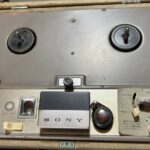 262
262
-
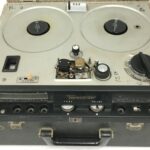 362
362
-
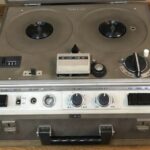 362-B
362-B
-
 401
401
-
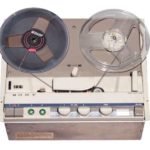 464
464
-
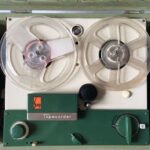 501
501
-
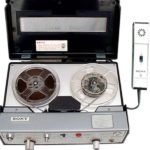 905-A
905-A
-
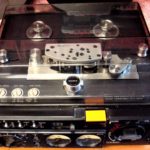 APR-2003
-
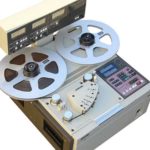 APR-5003
-
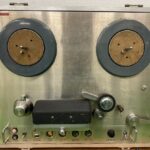 CP-12
CP-12
-
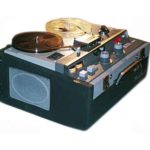 CS 300 Sterecorder
-
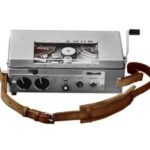 EM-1 'Newscaster'
-
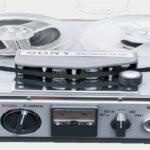 EM-2
EM-2
-
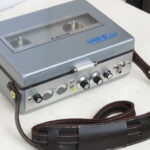 EM-3
EM-3
-
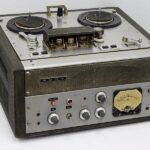 FT-3
FT-3
-
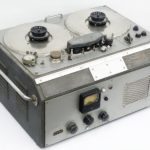 GT-6 Tokyo Telecommunications
-
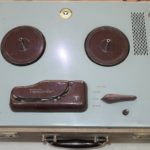 H1 Tokyo Telecommunications
-
 KP-3
KP-3
-
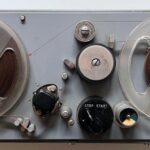 M-4 Tokyo Telecommunications
-
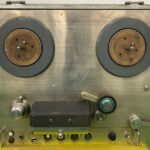 MT-1S
MT-1S
-
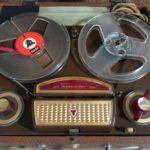 R1 Tokyo Telecommunications
-
 SONY TC-777S-4J
-
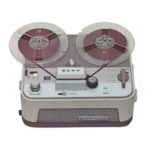 TC-102
-
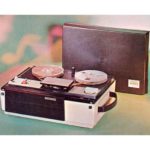 TC-104A
-
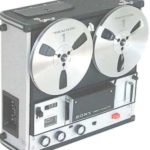 TC-105
-
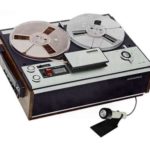 TC-106
-
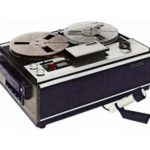 TC-108
-
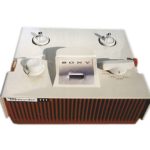 TC-111
-
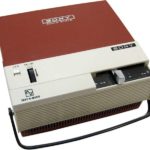 TC-123
-
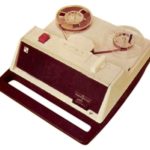 TC-135
-
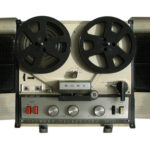 TC-200
-
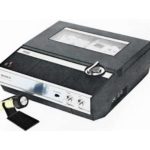 TC-210
-
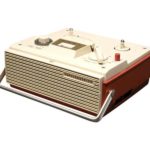 TC-211
-
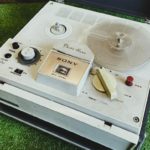 TC-221
-
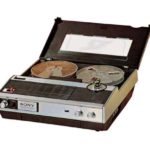 TC-222A
-
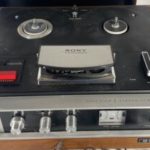 TC-230
-
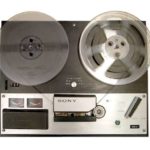 TC-250
-
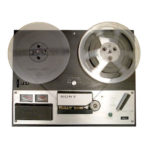 TC-250 A
-
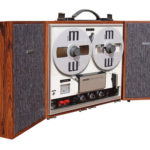 TC-252
-
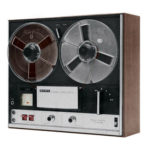 TC-252D
-
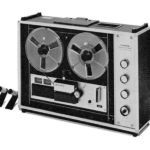 TC-260
-
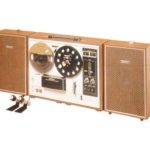 TC-270
-
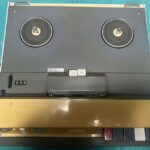 TC-272
-
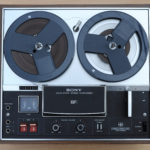 TC-280
-
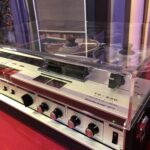 TC-330
-
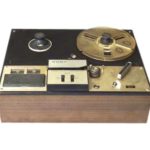 TC-350
-
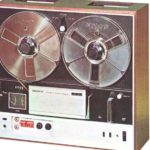 TC-355
-
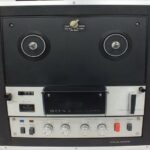 TC-365
-
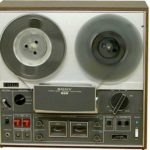 TC-366
-
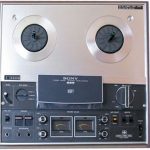 TC-377
-
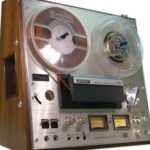 TC-378
-
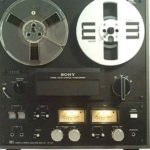 TC-399
-
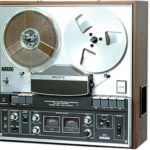 TC-440
-
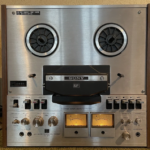 TC-458
-
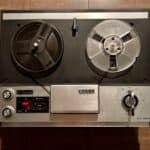 TC-500A
-
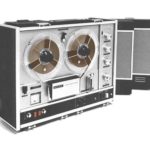 TC-540
-
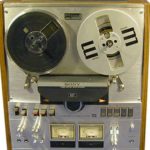 TC-558
-
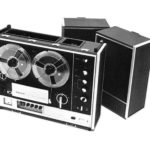 TC-560
-
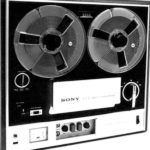 TC-560D
-
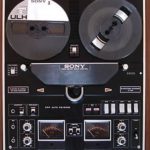 TC-580
-
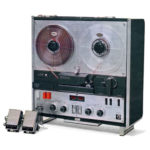 TC-600 (D)
-
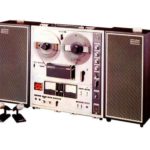 TC-630
-
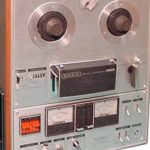 TC-630D
-
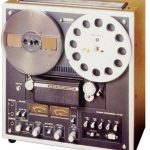 TC-640
-
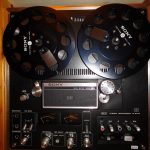 TC-640 A
-
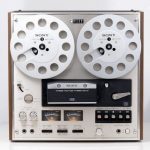 TC-645
-
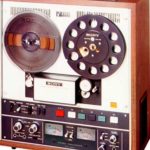 TC-651
-
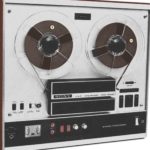 TC-666D
-
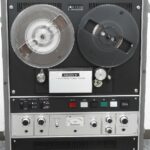 TC-707MC
-
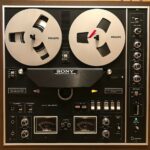 TC-730
-
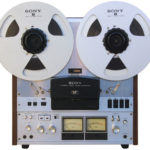 TC-755
-
 TC-756
-
 TC-758
-
 TC-765
-
 TC-770
-
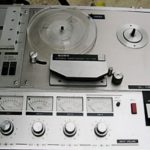 TC-774
-
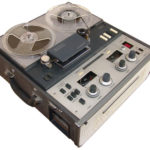 TC-777
-
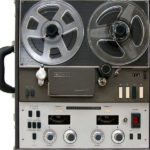 TC-777S
-
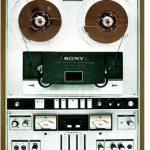 TC-780
-
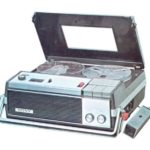 TC-800
-
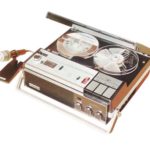 TC-800B
-
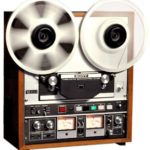 TC-850
-
 TC-900
-
 TC-905
-
 TC-907
-
 TC-277-4
-
 TC-366-4
-
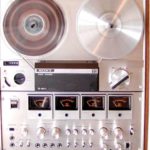 TC-388-4 Deluxe Quadradial
-
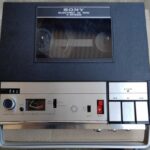 TC-4805
-
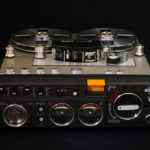 TC-510-2
-
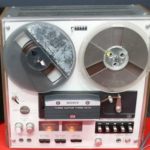 TC-6650
-
 TC-756-2
-
 TC-766-2
-
 TC-788-4 Quadradial
-
 TC-854-4
-
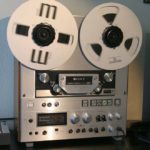 TC 880-2
-
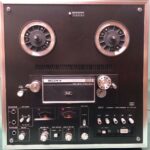 TC-9400A
-
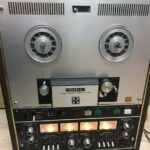 TC-9540
-
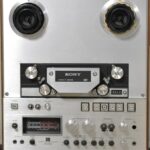 TC-8750-2
-
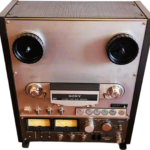 TC-R6
TC-R6
-
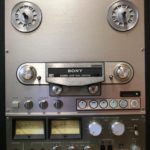 TC-R7-2
General Information Submit General Info
Manufacturer: Sony
Years in Business: 1946 To Present
Country: Japan
Years making R-R Tape Recorders: 1949 To 1985
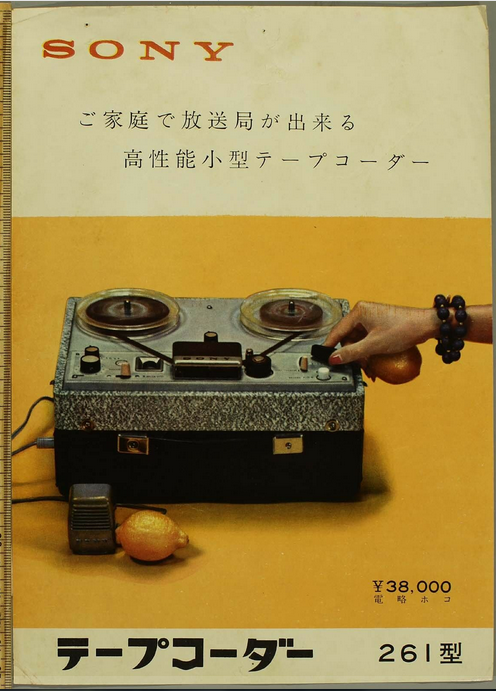
Pictured below are some pages from the 1957 brochure.
Here is an overview from a fully qualified technician here in Canada that shares opinions that I have heard from other similarly qualified, that Sony reel to reel tape recorders are generally not Great Service recommendations after all these years. Overview at the bottom of the page.